 _
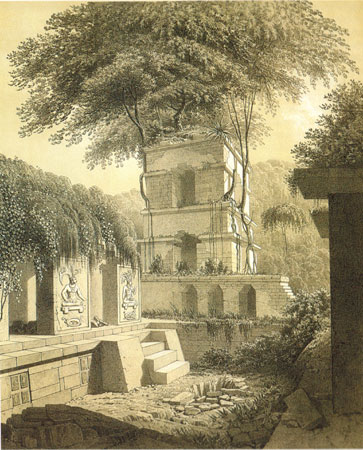
_Lámina 23: Castillo en Tulum
_
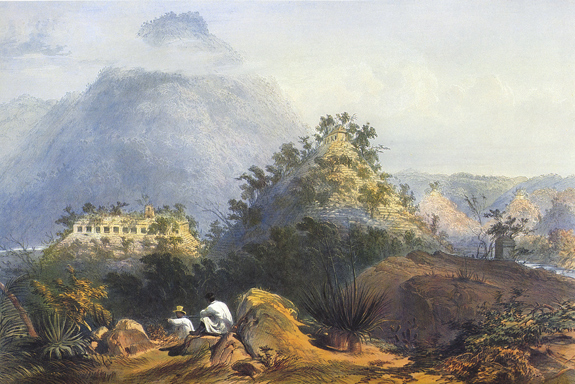
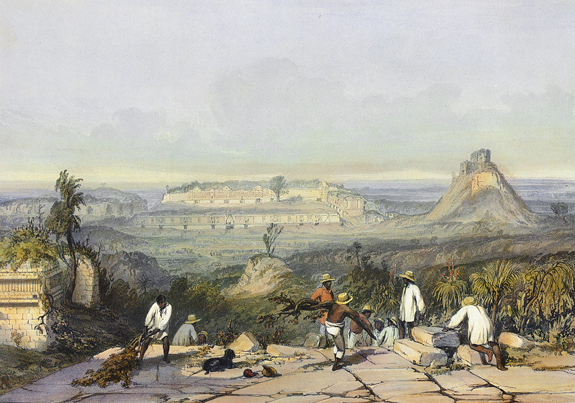
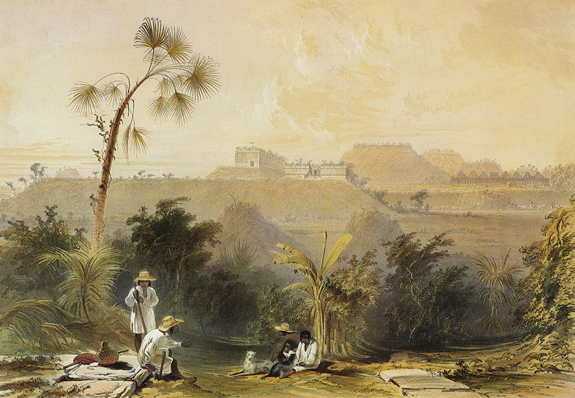
__"Esta litografía muestra el Castillo de Tulum, un templo en la costa este de la Península del Yucatán, famoso por sus espléndidas pinturas al fresco. Las escaleras del Castillo, sobresaliendo dramáticamente sobre los árboles y los pámpanos, conducen al cielo, e invitan al espectador a sentarse, como uno más de los protagonistas que aparecen en primer plano, para admirar el grandioso panorama. Catherwood utiliza hábilmente la ubicación de las figuras para atraer la mirada del espectador hacia la escena, haciendo que suba por las escalinatas de piedra, pase por los pilares, en su trayecto hacia las estructuras del fondo. Los sujetos parecen haberse entrometido en el paisaje natural para despejar la vegetación que había mantenido al sitio aislado por cientos de años. Aunque Catherwood nos brinda toda esta información visual, no logra expresar cuán espectacular es Tulum, del cual apenas dice que “está ubicado sobre un borde de piedras en la costa este de Yucatán.” En realidad este sitio arqueológico se encuentra ubicado sobre un acantilado de piedra caliza, a 40 pies de altura, majestuosamente erguido sobre las olas. Uno de los conquistadores que descubrió esta construcción, probablemente guiado por Juan de Grijalva, dijo al observarla por primera vez: “… La ciudad de Sevilla ni es mejor ni se le asemeja.”
__Tulum se desarrolló entre los años 1200 y 1520 de nuestra era, pero fue abandonada poco después de la conquista. Poco a poco los árboles y las plantas la fueron cubriendo hasta convertirla en un legado escondido y apacible de su gloriosa cultura. Como se puede apreciar en este gravado, la expedición de Stephens y Catherwood los llevó a asegurarse personalmente de que el sitio arqueológico fuese despejado. Pero, ¿Habrá sido ese el deseo de los mayas del mundo antiguo? Stephens y Catherwood abrieron el camino a una lucrativa actividad turística en Tulum, la cual ha convertido a este paraje en plataforma de acrobacias y paseos turísticos en bote, con miles de turistas concurriendo cada año. El templo se levanta hoy en día como legado del poder del capitalismo, yaciendo al descubierto, ante la mirada de los curiosos. ¿No será que los mayas hubiesen preferido que su historia permaneciese “oculta?”
__Tulum se desarrolló entre los años 1200 y 1520 de nuestra era, pero fue abandonada poco después de la conquista. Poco a poco los árboles y las plantas la fueron cubriendo hasta convertirla en un legado escondido y apacible de su gloriosa cultura. Como se puede apreciar en este gravado, la expedición de Stephens y Catherwood los llevó a asegurarse personalmente de que el sitio arqueológico fuese despejado. Pero, ¿Habrá sido ese el deseo de los mayas del mundo antiguo? Stephens y Catherwood abrieron el camino a una lucrativa actividad turística en Tulum, la cual ha convertido a este paraje en plataforma de acrobacias y paseos turísticos en bote, con miles de turistas concurriendo cada año. El templo se levanta hoy en día como legado del poder del capitalismo, yaciendo al descubierto, ante la mirada de los curiosos. ¿No será que los mayas hubiesen preferido que su historia permaneciese “oculta?”
_
*__*__*__*__*__*__*
__Plate 23: Castle, at Tuloom (on stone, by A. Picken)
_
__"This lithograph features the Castillo at Tuloom (today Tulum), a temple on the eastern coast of the Yucatán peninsula, well known for its splendid frescoes. Rising dramatically from the vines and trees, the Castillo’s steps lead up to the sky, inviting the viewer to sit, like the figure in the foreground, and admire the amazing view. Catherwood skillfully uses the placement of figures to draw the viewer's eye back into the scene, up the stone steps, past the pillars, to the structures beyond. The figures almost seem to intrude onto this natural setting, hacking away at the vegetation that had kept the site isolated for hundreds of years. While giving us all of this visual information, Catherwood fails to note how truly spectacular the site of Tulum is. He mentions that it is, “situated on a ledge of rocks on the eastern shore of Yucatán.” In reality, the site is placed precariously on a forty-foot limestone cliff, majestically towering over the waves. One of the conquistadors who discovered the site, probably led by Juan de Grijalva, said at first sight of Tulum, “... the city of Seville could not appear greater or better.”
__Tulum flourished between 1200 and 1520 CE, but was abandoned soon after the Spanish conquest. It became overgrown with trees and plants, a peaceful, hidden testament to a glorious culture. As is evident in this print, the Stephens and Catherwood expedition took it upon themselves to oversee the clearing of the site. But would the ancient Maya have ever wanted the site uncovered? Stephens and Catherwood paved the way for a lucrative tourist trade in Tulum, which has made the site a place for displays of acrobatics and boat tours, with thousands of people flocking to the site each year. The temple now stands as a testament to the power of capitalism, laid bare to all prying eyes. Perhaps the Maya would have preferred their history had remained “undiscovered?”.
_
_
Alyssa Ranker (Online exhibition Drawing from the Past)


 Entradas