Mostrando entradas con la etiqueta lámina. Mostrar todas las entradas

viernes, 20 de marzo de 2009

Lámina 23 de Catherwood

_
Lámina 23: Castillo en Tulum
_
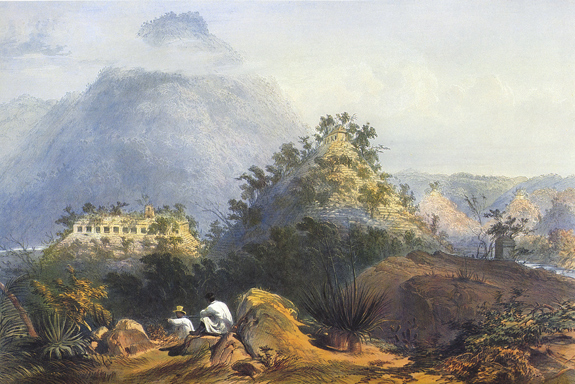
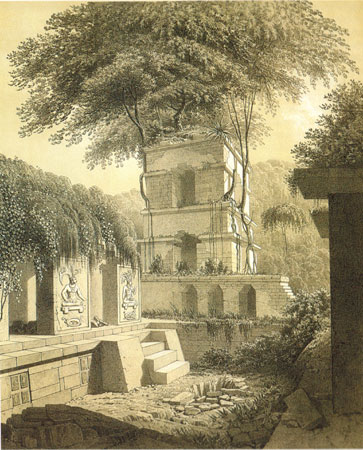
__"Esta litografía muestra el Castillo de Tulum, un templo en la costa este de la Península del Yucatán, famoso por sus espléndidas pinturas al fresco. Las escaleras del Castillo, sobresaliendo dramáticamente sobre los árboles y los pámpanos, conducen al cielo, e invitan al espectador a sentarse, como uno más de los protagonistas que aparecen en primer plano, para admirar el grandioso panorama. Catherwood utiliza hábilmente la ubicación de las figuras para atraer la mirada del espectador hacia la escena, haciendo que suba por las escalinatas de piedra, pase por los pilares, en su trayecto hacia las estructuras del fondo. Los sujetos parecen haberse entrometido en el paisaje natural para despejar la vegetación que había mantenido al sitio aislado por cientos de años. Aunque Catherwood nos brinda toda esta información visual, no logra expresar cuán espectacular es Tulum, del cual apenas dice que “está ubicado sobre un borde de piedras en la costa este de Yucatán.” En realidad este sitio arqueológico se encuentra ubicado sobre un acantilado de piedra caliza, a 40 pies de altura, majestuosamente erguido sobre las olas. Uno de los conquistadores que descubrió esta construcción, probablemente guiado por Juan de Grijalva, dijo al observarla por primera vez: “… La ciudad de Sevilla ni es mejor ni se le asemeja.”
__Tulum se desarrolló entre los años 1200 y 1520 de nuestra era, pero fue abandonada poco después de la conquista. Poco a poco los árboles y las plantas la fueron cubriendo hasta convertirla en un legado escondido y apacible de su gloriosa cultura. Como se puede apreciar en este gravado, la expedición de Stephens y Catherwood los llevó a asegurarse personalmente de que el sitio arqueológico fuese despejado. Pero, ¿Habrá sido ese el deseo de los mayas del mundo antiguo? Stephens y Catherwood abrieron el camino a una lucrativa actividad turística en Tulum, la cual ha convertido a este paraje en plataforma de acrobacias y paseos turísticos en bote, con miles de turistas concurriendo cada año. El templo se levanta hoy en día como legado del poder del capitalismo, yaciendo al descubierto, ante la mirada de los curiosos. ¿No será que los mayas hubiesen preferido que su historia permaneciese “oculta?”
_
*__*__*__*__*__*__*
__
Plate 23: Castle, at Tuloom (on stone, by A. Picken)
_
__"This lithograph features the Castillo at Tuloom (today Tulum), a temple on the eastern coast of the Yucatán peninsula, well known for its splendid frescoes. Rising dramatically from the vines and trees, the Castillo’s steps lead up to the sky, inviting the viewer to sit, like the figure in the foreground, and admire the amazing view. Catherwood skillfully uses the placement of figures to draw the viewer's eye back into the scene, up the stone steps, past the pillars, to the structures beyond. The figures almost seem to intrude onto this natural setting, hacking away at the vegetation that had kept the site isolated for hundreds of years. While giving us all of this visual information, Catherwood fails to note how truly spectacular the site of Tulum is. He mentions that it is, “situated on a ledge of rocks on the eastern shore of Yucatán.” In reality, the site is placed precariously on a forty-foot limestone cliff, majestically towering over the waves. One of the conquistadors who discovered the site, probably led by Juan de Grijalva, said at first sight of Tulum, “... the city of Seville could not appear greater or better.”
__Tulum flourished between 1200 and 1520 CE, but was abandoned soon after the Spanish conquest. It became overgrown with trees and plants, a peaceful, hidden testament to a glorious culture. As is evident in this print, the Stephens and Catherwood expedition took it upon themselves to oversee the clearing of the site. But would the ancient Maya have ever wanted the site uncovered? Stephens and Catherwood paved the way for a lucrative tourist trade in Tulum, which has made the site a place for displays of acrobatics and boat tours, with thousands of people flocking to the site each year. The temple now stands as a testament to the power of capitalism, laid bare to all prying eyes. Perhaps the Maya would have preferred their history had remained “undiscovered?”.
_
Alyssa Ranker (Online exhibition Drawing from the Past)

martes, 10 de marzo de 2009

Lámina 22 de Catherwood

_
Lámina 22: Teocalis en Chichén Itzá; El Castillo
_
__"Asomándose por un claro en plena selva de Yucatán, un monumental edificio Maya parece tocar el cielo, en la representación de Catherwood de la Pirámide de Kulkulcán. Aunque algunas partes de la estructura aparecen cubiertas por la densa vegetación, Catherwood quiso revelar el detalle más intrigante de la pirámide, dibujando en primer plano una de las muchas y elaboradas cabezas de serpiente.
__Esta pirámide Maya es una estructura de casi 80 pies de alto, de cuatro lados, con escaleras en cada uno. Hoy en día se pueden apreciar dos esculturas de cabezas de serpiente en la parte baja de cada escalera. Durante los equinoccios, en septiembre y marzo, el sol produce una sombra que se desliza por las 91 gradas de la escalera del norte, semejante a la figura de una serpiente desenrollándose. En la actualidad este sitio arqueológico sigue atrayendo a muchísimos turistas que fascinados admiran este magnífico tributo a Kulkulcán.
__Los mayas veneran una serpiente emplumada, el dios Kulkulcán o Quetzalcóatl. Cuenta la leyenda que un antiguo gobernador, Kulkulcán, fundó la ciudad Maya de Chichén Itzá, aunque hay varias versiones de esta historia. Una de ellas cuenta que el fundador errante fue consumido por fuego divino, y que su corazón se convirtió en el planeta Venus y sus cenizas en pájaros. En honor a esta deidad, los mayas edificaron las escaleras en forma de serpiente con asombrosa precisión. Catherwood logró identificar acertadamente el contexto religioso de la pirámide, por lo que la cabeza de serpiente de piedra aparece en primer plano."

_
*__*__*__*__*__*__*
_
Plate 22: Teocallis, at Chichén-Itzá (on stone, by A. Picken)
_
__"Rising through a clearing in the jungle of the Yucatán, a monumental Maya pyramid appears to touch the sky in Catherwood’s illustration of the Pyramid of Kulkulcán. Although parts of the structure are covered in dense foliage, Catherwood has unveiled the pyramid’s most intriguing detail by bringing one of its many elaborate stone snakeheads to the foreground.
__This Maya pyramid is a nearly 80-foot, four-sided structure with a staircase on each side. Today it is known that it has two snakehead sculptures at the bottom of each staircase. On the equinoxes in September and March the sun casts a shadow that cascades down the 91 steps of the northern staircase, resembling the shape of an uncoiling serpent. Today, the ancient site still draws many fascinated tourists who admire this skillful tribute to Kulkulcán.
__The Maya worshipped a feathered serpent god Kulkulcán, or Quetzalcóatl. Legend claims that an ancient ruler, Kulkulcán, founded the Maya city of Chichén Itzá. There are several versions of this story. In one, it was said that the wandering founder was devoured by divine fire. His heart turned into the planet Venus and his ashes became birds. To honor this deity, the Maya built the serpent staircases with astounding precision. Catherwood accurately identified the pyramid’s religious framework by dramatically bringing the stone snakehead to the illustration’s foreground".

_
Danielle Grogan and Shu Liu (Exhibition online Drawing from the Past)

lunes, 12 de enero de 2009

Lámina 20 de Catherwood

__Respondiendo a la petición de Mauricio Díaz de Guatemala, reanudamos la serie de dibujos de Catherwood y textos de la exhibición online titulada Drawing from the Past: Maya Antiquity Throught the Eyes of Frederick Catherwood. En esta ocasión, con la lámina número 20.
_

Plate 20: Well at Bolonchen

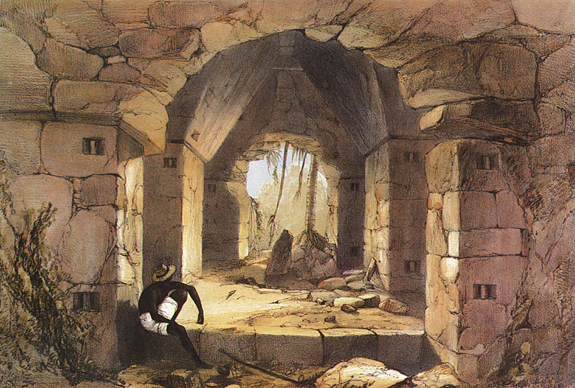
__"The town of Bolonchen (“The Village of Nine Wells”) is located on the Yucatán peninsula and is known today for its magnificent caves. It is in a desert region of Mexico, where there are no rivers and the only source of fresh water flows deep beneath limestone shelves. Catherwood’s drawing emphasizes the physical labor involved in obtaining water in this part of the world, while at the same time creating a romantic perspective on the mysteries of the Maya people. Light floods in from the mouth of the cave, yet the only illumination at the bottom of the cavern is the incandescent glow of a single torch. The rest of the cave is lost to darkness. One can hardly imagine the labor involved in building this ladder which provides the only access to the well below.
__Stephens and Catherwood, as well as other scholars of the time, wrote about the descendants of the ancient Maya as primitive and lacking the glory of their ancestors. However, this 80-foot-tall wooden ladder shows more than a glimmer of the past. Like their ancestors, the Maya of the 19th century were quite capable of using raw materials in a skillful and functional manner.

*_*_*_*_*

Lámina 20: Pozo de Bolonchen

__"El pueblo de Bolonchen (“La ciudad de los Nueve Pozos”) se encuentra en la Península de Yucatán y se conoce hoy en día por sus magníficas cuevas. Este pueblo está ubicado en una región desértica de México, donde no existen ríos y la única fuente de agua fresca fluye desde lo profundo de las capas de piedra caliza. La representación de Catherwood se enfoca en el trabajo físico que costaba extraer el agua en esta parte del planeta, mientras que a la vez le da una perspectiva romántica al carácter misterioso del pueblo Maya. La luz fluye desde la boca de la cueva, aunque la única fuente de iluminación en el fondo de la caverna es el brillo incandescente de una sola antorcha. El resto de la cueva se pierde en la oscuridad. Es casi imposible tan solo imaginar el trabajo que costó construir la escalera que daba acceso al interior.
__Stephens y Catherwood, al igual que otros estudiosos de la época, se refirieron a los descendientes de los mayas del mundo antiguo, como seres primitivos, desposeídos de la gloria de sus ancestros. Sin embargo, esta escalera de más de 80 pies de altura demuestra todo lo contrario. Al igual que sus ancestros, los mayas del siglo XIX sabían utilizar la materia prima de manera hábil y funcional"
.

Kate O’Connor-Morris y Ayla Schlosser (de la exhibición online Drawing from the Past)